
Introduction –
Seeing any ocean from under, you can always see the coral reef full of aquatic life in stunning colours and shapes. Coral by itself is stunning, but there is more to it than meets the eye. Learn about the unique characteristics of coral and the significance of its preservation for the planet and our oceans. The most ultimate and essential fact about corals is that they are animals. Despite their branch-like appearance and the hard calcium carbonate skeletons that some corals construct around their soft bodies, corals are actually animals! Because it has cells that are similar to those found in plants, the coral is a creature. Large provinces of small coral polyps, each with a mouth and a stomach, are the building blocks of coral reefs. The polyps define these provinces.
Fluorescent Molecules Protecting the Corals –
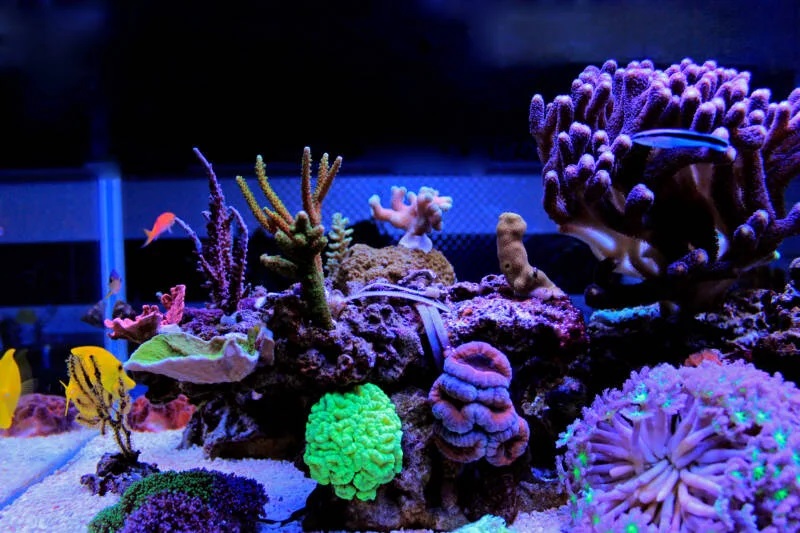
A new coral, also known as a staghorn coral, is a slow-growing organism that begins as a single polyp and can spread out over hundreds or thousands of years to form colonies the size of a car or a house. Staghorn corals are available for purchase right now and there are also euphyllia coral for sale. Ocean anemones and jellyfish are cousins of reef-building corals, which are referred to collectively as “Cnidarian.” Spacecraft are capable of observing coral reefs, which are some of the largest living structures on the planet. Corals can also take on a fluorescent colour. Some corals can produce natural fluorescent pigments that come in a variety of colours. Coral may be protected from high-light and ultraviolet light by fluorescent molecules.
How Corals Live and Survive –
Corals are indicator species, which means that they are very open to changes in their ecosystem’s environment. Coral colonies have been observed to survive for hundreds or thousands of years under ideal conditions. The researchers think they could live forever in ideal conditions! Plankton and small fish are consumed by corals. All coral polyp’s tentacles contain stinging cells that serve as harpoons for spearing plankton, which are floating organisms. Corals, like jellyfish, have stinging cells that let them catch, weaken, and eat fish and plankton. Algae and coral cells share a relationship that is beneficial to both parties because it is interdependent. The tiny algae that live inside the coral’s cells and use sunlight to produce food for the coral provide additional energy.
Distinct Species of Corals –
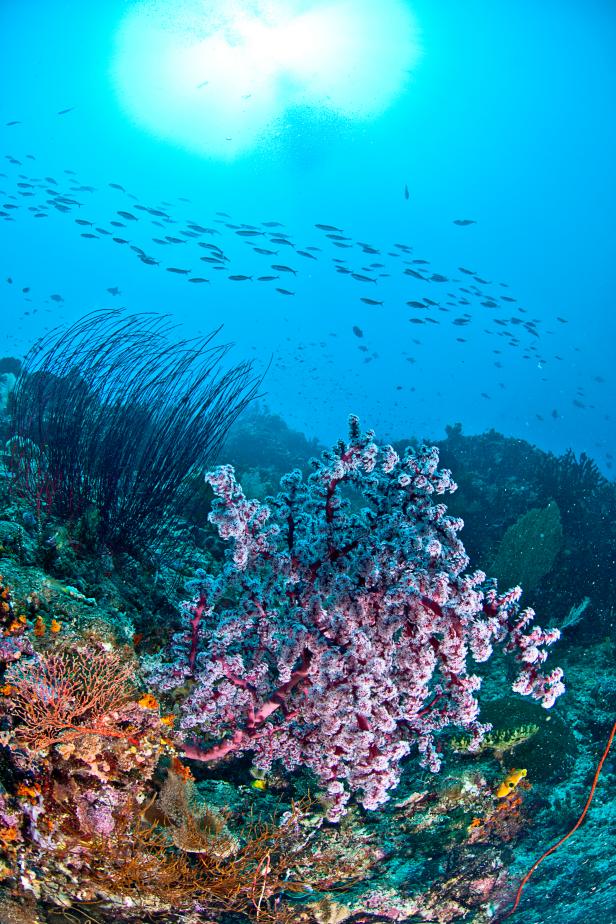
There are 100s of different kinds of coral, and they come in many different colours, sizes, and shapes. Corals that form enormous, oblong mounds on the sea floor are known as the namesake mound and boulder corals. Due to their maze-like shape, brain corals resemble human brains. Corals with branches can either form a flat top like a table or grow up and out like tree branches. Sea fans are a kind of soft coral without an exoskeleton that is hard. They have enormous, flat fans that move gently with the current of the water. Due to their resemblance to trees, sea pens and sea whips can give the impression of an underwater forest. Pillar coral colonies can take on the appearance of a city’s skyline because they grow in tall columns.