
 By
By 
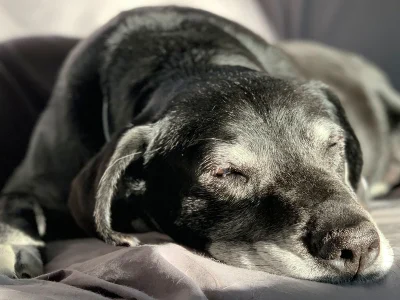
He’s ten now. He eats the same food he’s eaten for years, and somewhere over the last twelve months his digestion has quietly stopped being reliable.
Sometimes it’s constipation. Sometimes he goes off his food for a day. Sometimes he’s fine for a fortnight and then isn’t. And because it’s gradual, most owners file it under getting old and leave it there.
Some of it is age. A good deal of it isn’t, and quite a lot of what is can be helped.
What actually changes
The microbiome loses diversity. Older dogs consistently show less varied gut populations than younger ones, and diversity is one of the better markers of a resilient gut. A less diverse population copes less well with disruption, which is why an older dog takes longer to recover from an upset that a three-year-old would shrug off.
Digestive efficiency drops. Enzyme output declines with age and nutrients are absorbed less completely. The same bowl of food delivers slightly less than it used to.
Everything slows down. Gut motility reduces, which is why constipation becomes more common in older dogs while diarrhoea becomes relatively less so.
Thirst drive declines. Older dogs often drink less than they should, and less water means firmer, harder stools.
Activity drops, and movement is part of what keeps the gut moving.
Smell and taste fade, which affects appetite more than most owners realise – a dog who’s gone fussy at eleven may simply not be able to smell his dinner properly.
Taken together, that’s a digestive system running with considerably less margin than it had at four. It copes with normal days perfectly well and has much less in reserve for abnormal ones. Which is the argument for daily support rather than occasional intervention – and why the Best Probiotic for Dogs in old age tends to be the one he’ll reliably eat every day, with a stated CFU count and a prebiotic alongside it, rather than the one making the boldest claims.
Before you blame age
A short list of things that present as “his digestion has gone off” and are actually something specific.
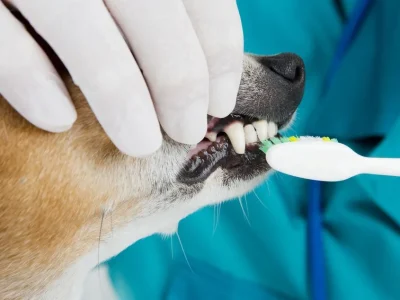
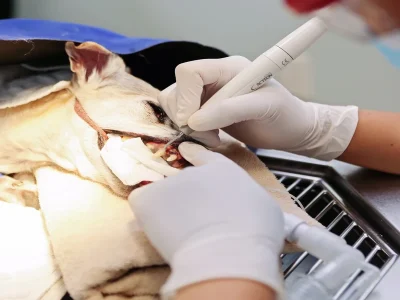
Dental disease. Enormously common, badly under-recognised, and genuinely painful. A dog with a rotten tooth eats less, chews less, bolts what he does eat, and drops food. Dental pain is one of the most frequent causes of appetite change in older dogs and one of the most rewarding things to fix.
Kidney disease. Increased drinking and urinating, nausea, reduced appetite, sometimes vomiting. Blood and urine tests find it, and catching it early changes the outlook considerably.
Liver disease. Vomiting, appetite loss, sometimes pale or yellowish gums.
Pancreatitis, which is more common in older and overweight dogs.
Exocrine pancreatic insufficiency, which can appear at any age.
Cancer. Nobody wants to think about it and it belongs on the list, particularly where there’s weight loss.
Medication. Long-term anti-inflammatories, common in arthritic dogs, can cause gastrointestinal upset. That’s a conversation with your vet about protection or alternatives rather than a reason to stop.
Weight loss in an older dog is never just age. It always warrants investigation, even in a dog who seems well otherwise.
Constipation, which is the new common problem
Straining, hard dry pellets, going less often, or a dog who postures repeatedly and produces nothing.
Usual causes: not enough water, not enough fibre, reduced activity, arthritis making the posture painful, prostate enlargement in entire males, and occasionally something more serious.
Practical things that help. Wet food or water added to kibble, which raises total fluid intake more reliably than putting out another bowl. Fibre – psyllium, plain tinned pumpkin, or a food with a bit more in it. Short, frequent walks rather than one long one. Non-slip flooring and a comfortable surface to toilet on, because a dog who’s uncomfortable squatting will hold on.
If he’s straining repeatedly and producing nothing at all, ring the vet the same day. Obstruction is a possibility and prolonged straining is genuinely uncomfortable.
Supporting the gut
This is where daily support earns its place, because you’re compensating for something that’s genuinely declining rather than fixing a one-off problem.
Choosing one at this stage means the same things it always did – a stated CFU count per serving, a named strain, a prebiotic alongside it – with one practical addition. Palatability matters more in an older dog. A supplement he won’t take because he can’t smell it properly is no use, and a soft chew he’ll eat as a treat is worth considerably more than a powder he’ll eat around.
Fibre deserves attention too. Fermentable fibre feeds the population, and an ageing gut with reduced diversity benefits from being fed properly.
Feeding an older dog
Smaller, more frequent meals. Three rather than two is easier on a slower system.
Warm the food. Ten seconds in the microwave, or a splash of warm water. It raises the aroma and it’s the single most effective thing for a dog whose appetite has faded.
Add moisture. Wet food, water in the kibble, or a low-salt broth. Hydration underpins most of this.
Soften it if there’s any dental problem, while you get the dental problem sorted out.
Keep protein up, not down. The old advice to restrict protein in healthy older dogs has largely been abandoned – ageing dogs use protein less efficiently and need adequate amounts to maintain muscle. Protein restriction belongs in diagnosed kidney disease, on veterinary advice, not as a general senior measure.
Senior diets, honestly
“Senior” isn’t a regulated term and the foods vary enormously. Some are lower in calories, some higher in fibre, some with added joint support.
The question worth asking is what problem you’re trying to solve. If he’s putting on weight and slowing down, a lower calorie food makes sense. If he’s losing weight or muscle, the last thing he needs is a diet food.
Judge on the dog in front of you – body condition, muscle over the spine and hips, coat, energy – rather than on the number on the packet.
Arthritis, and why it belongs in a digestion article
The connection isn’t obvious and it’s a real one.
An arthritic dog moves less, and movement is part of what keeps the gut moving. Less activity means slower transit and firmer stools, which is a straightforward mechanical route into constipation.
He may also find the toileting posture uncomfortable. A dog with sore hips who has to squat and hold the position will cut it short or put it off, and a dog who puts it off gets more constipated still.
Then there’s the medication. Long-term anti-inflammatories are the mainstay of arthritis management and they can irritate the gastrointestinal tract. That isn’t a reason to stop them – an untreated arthritic dog is in pain every day – but it is a reason to mention any digestive changes to your vet rather than managing them separately.
Practical things: non-slip runners over slippery floors, a level bit of ground to toilet on rather than a slope, more frequent short trips out, and a raised bed that’s easy to get out of. Sorting the pain out often improves the digestion as a side effect nobody predicted.
Water, in more detail
The most overlooked thing on the list, and the easiest to fix.
Older dogs drink less because the thirst mechanism becomes less sensitive with age, not because they need less. Meanwhile firmer stools, slower transit and reduced kidney efficiency all mean they need more.
Putting another bowl down rarely changes much. What does work is getting water in with the food – switching to wet, or adding warm water to kibble and letting it stand for ten minutes.
Water bowls in more than one room helps a dog who can’t be bothered to walk to the kitchen. A wider bowl suits dogs with whiskers and dogs with sore necks. And keeping bowls off slippery floors matters more than you’d think, because a dog who slipped at the water bowl once will drink less afterwards.
One caution: if he’s suddenly drinking far more than usual, that’s the opposite problem and needs a vet. Increased thirst is the first sign of several treatable conditions in older dogs.
The accidents question
Older dogs sometimes start having accidents indoors, and it’s worth separating three quite different causes because they need different answers.
Digestive urgency. He can’t hold it. Usually accompanied by loose stools.
Physical. Weakness, arthritis, or simply not being able to get to the door in time. Often solved with more frequent trips out and better flooring.
Cognitive decline. He’s forgotten the rules, or forgotten to ask. Often comes with night-time restlessness, disorientation and changes in interaction.
The last one is treatable to a useful degree and worth raising with your vet rather than accepting. And none of them should be told off – an older dog having accidents is not being naughty.
What to monitor
Weigh him monthly. Weight loss shows up on scales long before it shows up to the eye, and it’s the single most useful number you can track.
Keep a note of stools, appetite and drinking. Increased thirst in particular is worth catching early – it’s the first sign of several treatable conditions.
Check his mouth every few weeks, or at least lift the lip and look at the back teeth.
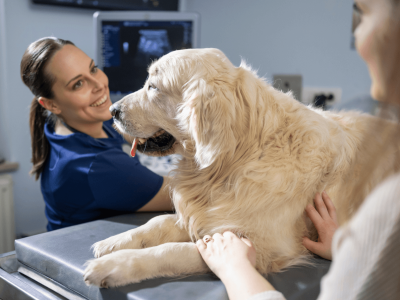
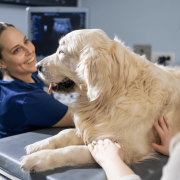
And get twice-yearly check-ups rather than annual ones once he’s into double figures. Six months is a long time in an old dog.
When to ring the vet
Any weight loss. Increased drinking or urinating. Vomiting more than occasionally. Diarrhoea lasting more than twenty-four hours, since older dogs dehydrate faster than middle-aged ones. Straining with nothing produced. Blood anywhere. A sudden change in appetite in either direction.
And trust your judgement about a dog you’ve known for a decade. Owners are usually right that something has changed, well before anything shows on a test, and “he’s just not himself” is a legitimate reason to book an appointment.


Comments